
Until then I leave you with this image:
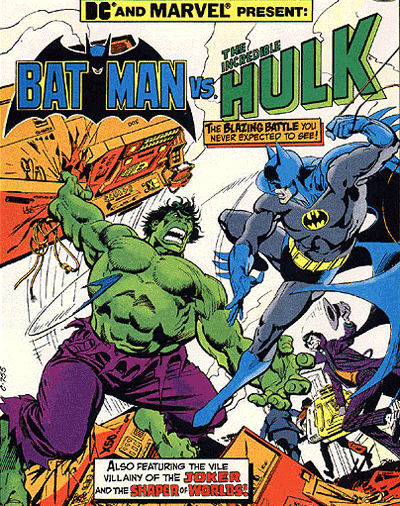
and this link:
http://hulkangry.com/images/hulk_vs_batman.htm
posted by Jon Silpayamanant @ 1:10 PM
0 comments


posted by Jon Silpayamanant @ 1:10 PM
0 comments
The Korean government is very into promoting comics as a medium, not as something that's just for kids. They're very involved. This particular spelling is official.
Essentially it's the same word. It means comics. Manga, manhwa, no matter how you spell it... How the Koreans do it is hwa. It's not always the same, it's just slightly different phonetics. If you look at it, it's all written the same. All the Asian people read the same two words. It means comics. It's just comics. It's the difference between Kleenex or tissue paper. They brand this thing. A lot of people say, "you have a Kleenex?" They mean do you have a tissue paper. It's kind of like now when they brand manga as Japanese comics, because it's a format. It's black and white, it has more pages than the standard American comic. That's how they do it. We feel a distinguished difference between Korean content and Japanese content. They're similar enough, but deep down there are many differences.
How many new trade paperback volumes are published monthly in Korea?
[Eric] Ko: A lot. About 45 million tankoubons, or collected volumes, a year. That was in 2003, I believe.
How many separate titles?
[Charles] Park: Four or five thousand titles a year.
posted by Jon Silpayamanant @ 9:17 PM
6 comments
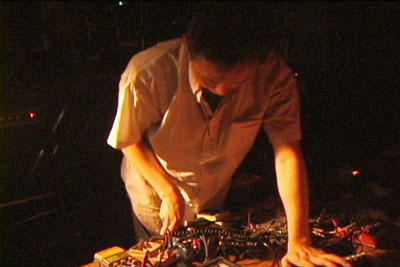
Dear everyone
i'm terribly sorry to inform you this sad news though,
Koji Tano (MSBR) passed away on July 31, at age 44,
because of carcinoma of the colon and rectum.
the funeral ceremony took place at a temple in Tokyo today (August 2).
i'm really speechless with sudden shock and sorrow.
Sincerely yours
Kazuyuki Kishino (KK.NULL)
The best thing in this issue, though, is the stunning manga story by Koji Tano of MSBR. "The Fool Who Fell to Hell" starts out as a reasonably typical paranoid-fantasy story (a sweaty homeless guy watches kids playing in the park and flashes back to hellish school days) before the bottom falls out (literally -- he falls in a hole down to hell) and the whole thing becomes surreal, grotesque, and not a little bit scary. The pix of the minotaur demon squashing damned souls with a huge cement block and then stuffing them all in his mouth is completely amazing. Hopefully there will be more to come in this vein from Tano, for this is unspeakably cool....
from:
monotremata.com review archives
posted by Jon Silpayamanant @ 10:51 PM
0 comments
posted by Jon Silpayamanant @ 5:01 AM
2 comments
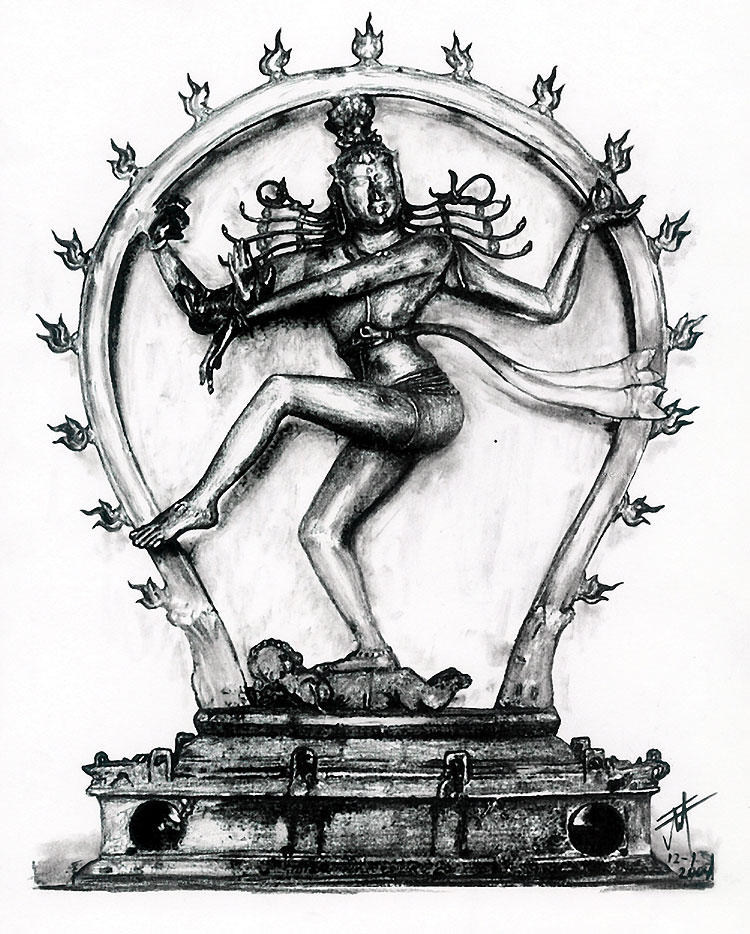
drawing of the Śiva Nataraja bronze sculpture at the Naltumi Isvaram Temple, Punjai, India (click image for detail)
Jon Silpayamanant
pencil
8 1/2 x 11
(2004-12-01)
posted by Jon Silpayamanant @ 8:49 AM
0 comments
"How much manga have the people on this thread actually read? And how much do you know about manga in general?"
Ok, since we're quibbling about definitions in general--are you asking about Chinese Manhua and Korean Manwha as well? What about all the "manga" of India, Thailand Gahdoon books, Indonesian Cerita silat bergambar, Cambodian Salapak--do the Hong Kong Jademan comics count? The answer here could make the difference between a few hundred to a few thousand.
How am I supposed to count Shojo Beat and Shonen Jump, both of which I read regularly? Do we count each individual story or just the volume as a whole? What if these are the only "real" manga I read? Does this mean that I don't really know anything about manga because I only read hundreds of "derivative" manga from the other dozen or so Asian countries that produce their own manga?
Could we ask how much someone, that only reads Japanese manga, if they really know anything about manga? Does it really matter?
Is a tankōbon just one manga?
What about Western manga? We counting Nouvelle Manga? Bryan Lee O'Malley? Becky Cloonan?
I guess I'd just have to say it really depends on what you mean by manga, and how you want to define "knowledge about manga" relative to how manga itself is defined.
posted by Jon Silpayamanant @ 7:36 PM
7 comments
posted by Jon Silpayamanant @ 8:37 AM
0 comments

posted by Jon Silpayamanant @ 3:39 AM
4 comments

posted by Jon Silpayamanant @ 4:05 PM
0 comments

In the Italian language, fumetti are all comics, not just photo novels (fumetti literally means "little clouds of smoke", in reference to speech balloons). Instead, Italians call photo-illustrated comics fotoromanzi. Fumetti are also popular in Spain and Latin America, where they are called fotonovelas, and in France. Fumetti have never been widely appreciated in the United States.
Rampike is a forum for post-modern artistic and literary expression within a thematic format. Photo-copies of written submissions are welcome. Rampike is not responsible for the return of texts or photographs. Rampike is funded by the Canada Council for the Arts, the Ontario Arts Council and by private sources. We would like to extend our special thanks to the Lewis Johnstone Gallery (London).
posted by Jon Silpayamanant @ 8:32 AM
0 comments

Kittiwat Unarom, 28, a Thai art student, sits behind his works "human being parts" made of bread at his studio in Potharam district of Ratchaburi province, south of Bangkok, Thailand, Friday, Sept. 2, 2005. Kittiwat who is a son of bakery owners said he spent about six months to create his eatable works with a concept of "do not believe of what you see" intended to put them on exhibition at the Institute of Thai Arts in Bangkok later this year. (AP Photo/Apichart Weerawong)
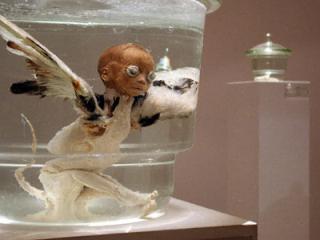
A Chinese artist who grafted the head of a human fetus onto the body of a bird has defended his work as art after a Swiss museum withdrew the piece from an exhibit.
``It's precisely because I respect all life that I did this,'' artist Xiao Yu said Tuesday. He said the bird and fetus ``died because there was something wrong with them. ... I thought putting them together like this was a way for them to have another life.''
Swiss museum visitor Adrien de Riedmatten, 29, filed a complaint on Monday with the district attorney of Bern, Switzerland, calling for an investigation into the piece, which was on display at the Bern Art Museum.
``I want to know where this baby comes from and if it was killed for this work,'' de Riedmatten said. ``We know about the problems of late-term abortions in China and we have the right to ask ourselves questions.''
The work was removed, curator Bernhard Fibicher said Tuesday, because museum directors didn't want the controversy surrounding it to overshadow the rest of the ``Mahjong'' exhibit, which features avant-garde Chinese works from the last 25 years. The museum is planning an Aug. 22 symposium with artists, philosophers and ethics experts before deciding whether to re-exhibit the piece.
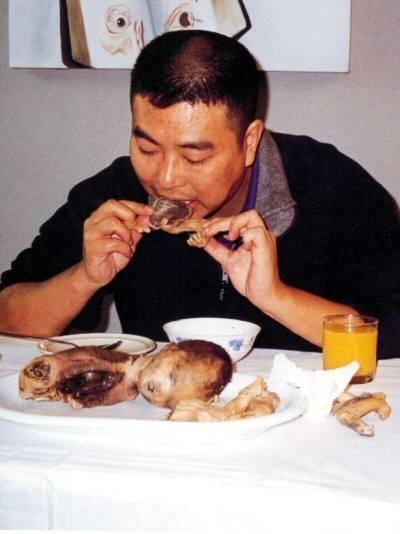
The artist himself, whose past accomplishments include an opus entitled "Canned Human Brains," has claimed in interviews that he used real aborted fetuses stolen from a medical school to create "Eating People" and that he actually cooked and ate them "for art's sake."

posted by Jon Silpayamanant @ 2:13 AM
0 comments
Comics, Orientalism, Culture and Imperialism, Comparative Neurolinguistics, and Performance Theory.


 Afghani comics
Albanian comics
Algerian comics
Australian comics
Belgium comics
Bosnian comics
Brazilian comics
Bulgarian comics
Burmese comics
Cambodian salapak
Canadian comics
Chinese manhua
Columbian comics
Croatian comics
Cuban comics
Czechoslovakian comics
Danish comics
East Timor comics
Egyptian comics
Estonian comics
Finnish comics
French bande dessinée
German comics
Ghanian comics
Hong Kong manhua
Indonesian comics
Iranian comics
Iraqi comics
Irish comics
Israeli comics
Italian fumetti
Japanese manga
Kenyan comics
Korean manhwa
Kuwaiti comics
Lebanese comics
Lithuanian comics
Macedonian comics
Malaysian comics
Mexican comics
Moroccan comics
Mozambique comics
New Zealand comics
Nigerian comics
Norwegian comics
Pakistani comics
Papua New Guinea comics
Philippino comics
Polish comics
Portugese comics
Romanian comics
Russian comics
Saudi Arabian comics
Scottish comics
Senegalese comics
Singapore comics
Slovenian comics
Somalian comics
South African comics
South Korean manhwa
Swedish comics
Syrian comics
Taiwanese manhua
Tanzanian comics
Thai comics
Tunisian comics
Turkish comics
UK comics
United Arab Emirates comics
Welsh comics
Yakutian comics
Yugoslavian comics
Afghani comics
Albanian comics
Algerian comics
Australian comics
Belgium comics
Bosnian comics
Brazilian comics
Bulgarian comics
Burmese comics
Cambodian salapak
Canadian comics
Chinese manhua
Columbian comics
Croatian comics
Cuban comics
Czechoslovakian comics
Danish comics
East Timor comics
Egyptian comics
Estonian comics
Finnish comics
French bande dessinée
German comics
Ghanian comics
Hong Kong manhua
Indonesian comics
Iranian comics
Iraqi comics
Irish comics
Israeli comics
Italian fumetti
Japanese manga
Kenyan comics
Korean manhwa
Kuwaiti comics
Lebanese comics
Lithuanian comics
Macedonian comics
Malaysian comics
Mexican comics
Moroccan comics
Mozambique comics
New Zealand comics
Nigerian comics
Norwegian comics
Pakistani comics
Papua New Guinea comics
Philippino comics
Polish comics
Portugese comics
Romanian comics
Russian comics
Saudi Arabian comics
Scottish comics
Senegalese comics
Singapore comics
Slovenian comics
Somalian comics
South African comics
South Korean manhwa
Swedish comics
Syrian comics
Taiwanese manhua
Tanzanian comics
Thai comics
Tunisian comics
Turkish comics
UK comics
United Arab Emirates comics
Welsh comics
Yakutian comics
Yugoslavian comics My ClipShack

